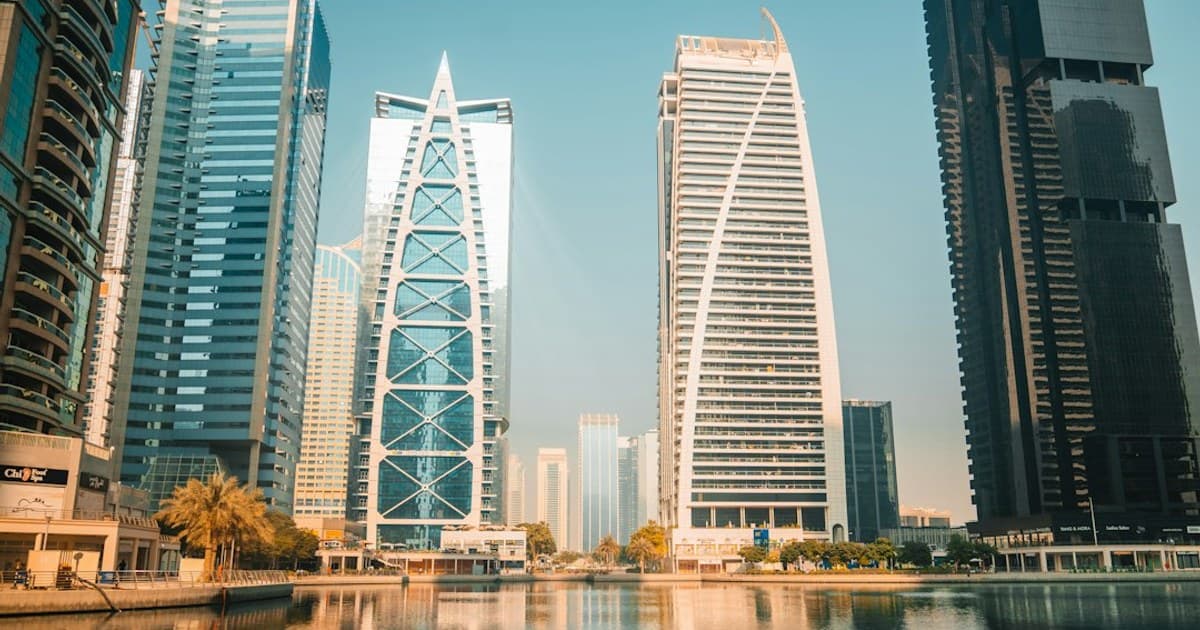
DMCC has more than 26,000 member companies from 180 countries (DMCC, 2026). Until last month, not one of them could hold its shares in a succession vehicle inside the same free zone it trades from. That changed on 23 September, when DMCC adopted its Foundations Regulations and became the fourth UAE jurisdiction with a dedicated foundation regime.
TL;DR: DMCC adopted its Foundations Regulations on 23 September 2026. A DMCC Foundation is a separate legal entity that holds and passes on assets, and can be set up with initial assets from USD 100. It joins DIFC, ADGM and RAK ICC. Registration of interest is open now; full onboarding follows within weeks.
What Is a DMCC Foundation?
It is a legal entity with no shareholders. A DMCC Foundation holds assets in its own name, separate from its founder, its councillors, its guardian and its beneficiaries (DMCC, 2026). Nobody owns it, which is the whole point of the structure.
The founder writes the rules at the start: who benefits, how assets get distributed, who sits on the council, how decisions are made. Certain powers can be reserved to the founder or to another named person, including investment decisions, appointments and anything touching beneficiaries.
Think of it as sitting between a company and a trust. It has the separate legal personality of a company, so it can sign contracts and hold shares directly, without the trustee arrangement civil-law jurisdictions handle awkwardly. Minimum initial assets are USD 100, matching ADGM and RAK ICC, so the barrier is governance work rather than capital.
Why Would a Family Business Set One Up?
Because ownership and death are a bad combination without a plan. An estimated USD 1 trillion of assets is projected to pass between generations in the GCC by 2030, and fewer than one in three family businesses have a succession plan that is both documented and communicated (Khaleej Times, 2026).
A foundation fixes the ownership question in advance. Shares in the trading company sit with the foundation, so a shareholder death does not freeze the business while heirs are identified and a succession certificate is issued. The council keeps operating under rules the founder wrote while alive.
What we see most often is a UAE free zone company where the licence, the bank mandate and the visa quota all trace back to one individual. The company is fine commercially and fragile structurally. A foundation is one of the few ways to separate who controls the business from who eventually benefits from it.
How Does DMCC Compare With DIFC, ADGM and RAK ICC?
On the written rules, closely. The differences show up in filing, privacy and where the regime is already proven.
| DMCC | DIFC | ADGM | RAK ICC | |
|---|---|---|---|---|
| Regime | Foundations Regulations 2026 | Law No. 3 of 2018 | Foundations Regulations 2017 | Foundations Regulations 2019 |
| Minimum initial assets | USD 100 | No statutory minimum | USD 100 | USD 100 |
| Registered agent | Optional with DMCC office | Optional | Optional | Mandatory |
| Council members public | Pending guidance | Yes, for a fee | No | No |
Sources: DMCC (2026), BSA Law, ADGM Foundations Regulations 2017 and RAK ICC Foundations Regulations 2019.
DIFC leads on volume by a wide margin, with 1,409 registered foundations at the end of the first half of 2026, up 67% in twelve months (DIFC, 2026). ADGM has built a similar base among Abu Dhabi families, and RAK ICC competes on cost and privacy. DMCC's argument is proximity. If the operating company is already a DMCC entity, the licence and the foundation sit on the same registry.
The Protections That Make the Difference
This is where foundation regimes earn their fees. The DMCC Regulations include firewall provisions that protect the foundation against conflicting foreign laws, forced-heirship claims and certain foreign judgments, plus creditor protection that falls away where assets were moved while the transferor was insolvent or with intent to defraud (M/HQ, 2026).
Forced heirship is the clause that matters for most expatriate founders. Many home jurisdictions reserve fixed shares of an estate for specific relatives, whatever the will says. A firewall provision tells a DMCC court to apply DMCC rules to the foundation's assets and to disregard a foreign claim built on that reserved share.
Two other provisions matter. Claims against the foundation or against a transfer of property into it are subject to a three-year limitation period. And disputes default to arbitration, with the DIFC Court designated as the relevant court unless DMCCA specifies otherwise.
Does a DMCC Foundation Pay UAE Corporate Tax?
By default, yes. A foundation is a juridical person, so it falls inside the corporate tax net and must register with the Federal Tax Authority. Late registration carries an AED 10,000 penalty (FTA, 2026).
The relief route is Article 17, which lets a qualifying family foundation apply to be treated as an Unincorporated Partnership so income flows through to beneficiaries instead. The application has to be made before the end of the relevant tax period, and an approved foundation files an annual confirmation within nine months of each tax period end. The five tests and the FTA mechanics are in our guide to UAE family foundations and corporate tax.
One point founders miss: the foundation's tax position and the operating company's are separate questions. If the trading company is a Qualifying Free Zone Person, moving its shares into a foundation does not by itself disturb that, but the conditions for keeping the 0% rate still have to be met year on year.
When a Foundation Is the Wrong Answer
When there is nothing structural to solve. A single-owner consultancy with no dependants, no property and no intention of outliving the founder does not need a foundation. It needs a will and a clear bank mandate.
Foundations also carry a real administrative load. Council meetings, minutes, beneficiary records, the annual corporate tax confirmation, and ultimate beneficial ownership reporting all continue for as long as the entity exists. Set one up and abandon the paperwork, and the firewall provisions are the first thing a motivated foreign claimant will test.
One question clients always ask is whether a foundation can hold UAE real estate. In DIFC it can, under a memorandum with the Dubai Land Department covering freehold areas, and ADGM foundations can hold Abu Dhabi property. DMCC has not published its position yet.
What Is Still Unclear?
Three things, and they all affect timing. DMCC's detailed guidance has not been published, the digital onboarding platform is still being built, and the real-estate question above is unaddressed. Registration of interest is open at dmcc.ae, with full rollout promised within weeks.
So for a founder with a live succession problem, DIFC, ADGM and RAK ICC are available today and DMCC is available soon. When we reviewed a client's holding structure last quarter, the deciding factor was not the regime anyway. It was whether the family could agree on who sat on the council, and that conversation can start now whichever jurisdiction wins.
Your Next Steps Before Onboarding Opens
Start with the asset list. Write down what the foundation would actually hold: shares in which companies, which bank accounts, which property, which intellectual property. Most of the delay comes from assets that turn out to be encumbered or jointly held.
Then settle governance on paper. Who is the guardian, who sits on the council, which powers does the founder keep, and what happens when the founder dies. Our advisory team runs this exercise with families before any registry is approached, because the registry question is the easy part.
Finally, map the tax consequences before you move anything. A share transfer into a foundation can touch corporate tax, the free zone qualifying-income tests and, where a group exists, the participation exemption. Model it first.
Frequently Asked Questions
How much does a DMCC Foundation cost to set up?
DMCC has not published its fee schedule yet. The Regulations set minimum initial assets at USD 100, which is the value the foundation must hold rather than a registration fee. Expect DMCC's own charges plus legal drafting for the charter and by-laws, usually the larger number.
Can I move an existing DIFC or RAK ICC foundation into DMCC?
The 23 September announcement does not address migration or continuation from another jurisdiction. Several UAE regimes allow it, so it may appear in DMCC's detailed guidance. Treat it as unconfirmed until then.
Is a foundation the same as a family office?
No. A foundation is an ownership vehicle that holds assets. A family office is an operating business that manages them, and in DIFC or ADGM it may need its own licence. Larger families run both.
Will a foundation protect assets from a foreign court?
Partly. The firewall provisions direct a DMCC court to apply DMCC law and disregard foreign forced-heirship claims and certain foreign judgments. They do not help where assets were moved while insolvent or to defraud creditors, and they do not bind a foreign court over assets held abroad.
Weighing DMCC against DIFC, ADGM or RAK ICC for a family structure? Get in touch and we will map your current ownership chain, the corporate tax consequences of moving shares into a foundation, and which regime fits what you actually hold.