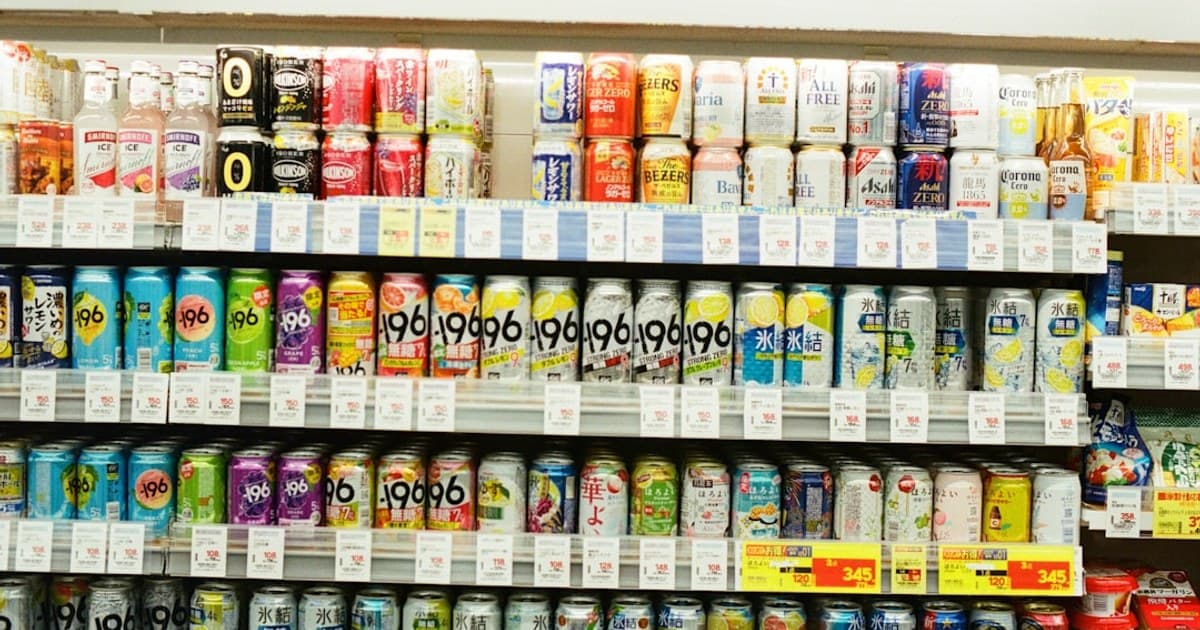
If you make, import, or stock sweetened drinks in the UAE, the way your excise tax is worked out changed on 1 January 2026. The old flat 50% rate is gone. In its place is a tiered per-litre charge based on how much sugar each drink contains. And if you have not certified your sugar content, the Federal Tax Authority (FTA) taxes you at the highest tier by default.
TL;DR: From 1 January 2026, UAE excise on sweetened drinks moved from a flat 50% of retail price to a per-litre charge tied to sugar content: 0 AED under 5g per 100ml, 0.79 AED per litre for 5 to under 8g, and 1.09 AED per litre for 8g or more. Producers, importers, and stockpilers need an Emirates Conformity Certificate proving sugar content, or the drink is taxed at the top rate.
What Changed for Sweetened Drinks in 2026?
The UAE replaced the flat-rate excise on sweetened drinks with a sugar-based model. Until 31 December 2025, every sweetened drink carried a 50% excise charge calculated on its retail selling price, no matter how much sugar it held (Ministry of Finance, 2025).
Cabinet Decision No. 197 of 2025 scrapped that approach and brought in the "tiered volumetric model" (Federal Tax Authority, 2026). The decision repealed the earlier framework under Cabinet Decision No. 52 of 2019. Tax is now charged per litre of the finished drink, and the rate rises with sugar content. The government's stated aim is to encourage lower-sugar formulations and reduce sugar-related health costs.
What Are the New UAE Excise Tax Rates?
Tax is set by the total sugar per 100ml of the drink, then applied to each litre. Three bands apply:
| Sugar content (per 100ml) | Excise per litre |
|---|---|
| Less than 5g, or artificial sweeteners only | 0 AED |
| 5g to under 8g | 0.79 AED |
| 8g or more | 1.09 AED |
These figures come straight from the Ministry of Finance and match the FTA's published guidance (Ministry of Finance, 2025). The shift from a price basis to a volume-and-sugar basis is the single biggest change. A cheap high-sugar drink and a premium one now pay the same per litre if their sugar content matches, where before the pricier product paid more.
The Drinks That Are Taxed, and the Ones That Are Not
A drink is caught if it contains added sugar or other sweeteners such as honey. The rules apply whether the product is ready to drink or supplied as a concentrate, powder, gel, or extract that turns into a drink (Federal Tax Authority, 2026). For concentrates and powders, the charge is worked out on the total volume of the finished drink once it is prepared, not the volume of the concentrate itself.
Several drinks sit outside the charge. Beverages sweetened only with artificial sweeteners like aspartame, sucralose, or stevia fall in the 0 AED band. Drinks made from 100% natural fruit or vegetable juice with no added sugar are not treated as sweetened drinks at all. Products that are at least 75% milk, baby formula, and drinks for special dietary or medical needs are also excluded (KPMG, 2026).
Why Does the Emirates Conformity Certificate Matter?
Because without it, your product is taxed at the highest tier regardless of its actual sugar. From 1 January 2026, producers, importers, and stockpilers must hold an Emirates Conformity Certificate for Sugar and Sweeteners Content, issued through the Ministry of Industry and Advanced Technology (Federal Tax Authority, 2026).
The certificate rests on a laboratory report from an accredited lab confirming sugar content per 100ml. If you cannot prove the figure, the FTA applies the 1.09 AED per litre top rate until you do. In our experience, this is where businesses lose money without realising it: a genuinely low-sugar drink pays the maximum charge simply because the paperwork is not in place. Getting the lab test and certificate sorted is the first practical step, not an afterthought.
Who Pays, and How Is It Calculated?
The charge falls on the business that produces, imports, or stockpiles the goods, and it is declared through the FTA's excise tax system. Take a one-litre bottle holding 9g of sugar per 100ml. That sits in the top band, so the excise is 1.09 AED. A one-litre drink at 6g per 100ml pays 0.79 AED, and a one-litre drink at 4g pays nothing.
Concentrates are where the numbers can surprise you. A concentrate that makes 10 litres of a high-sugar drink carries 10 times the per-litre rate, so 10.90 AED, not a single litre's worth. One question importers keep asking us is whether reformulating below a threshold is worth it. Often it is: dropping a recipe from 8g to just under 8g per 100ml moves a whole product line from 1.09 to 0.79 AED per litre.
What Your Business Should Do Now
If you deal in sweetened drinks, treat this as a live compliance task rather than a future one, because the rules already apply. A short checklist covers most of it:
- Get accredited lab results for every SKU and apply for the Emirates Conformity Certificate through the Ministry of Industry and Advanced Technology.
- Recheck your excise registration and make sure each product is coded to the correct sugar band.
- Review pricing and margins, since the tax base has moved from selling price to sugar and volume.
When we reviewed a client's product range recently, two of their "diet" lines were still being declared at the top tier because no certificate had been filed. Fixing the paperwork changed the tax on those lines overnight. The businesses that act early avoid overpaying and sidestep penalties for incorrect declarations.
Frequently Asked Questions
Does the new sugar tax apply to carbonated and energy drinks?
The tiered volumetric model in Cabinet Decision No. 197 of 2025 is specific to sweetened drinks. Other excise goods, including energy drinks, tobacco products, and electronic smoking devices and liquids, continue to be taxed on their existing percentage-of-price basis. If a carbonated drink contains added sugar, check whether it also meets the sweetened-drink definition, as some products fall under more than one category.
What happens if I do not get the Emirates Conformity Certificate?
Your drink is taxed at the highest band, 1.09 AED per litre, until you provide an accredited laboratory report proving a lower sugar content. That means a low-sugar or artificially sweetened product could pay the maximum charge purely because the certificate is missing. The certificate is issued via the Ministry of Industry and Advanced Technology.
Are drinks with only artificial sweeteners taxed?
No. Drinks sweetened solely with artificial sweeteners such as aspartame, sucralose, saccharin, or stevia, with no added sugar, fall in the 0 AED band. You still need to certify the content so the FTA does not default you to the top rate.
When did the new UAE excise rates take effect?
The tiered volumetric model applied to all taxable persons from 1 January 2026. There was no phased grace period, so businesses handling sweetened drinks should already be declaring under the new rates.
How is excise calculated on concentrates and powders?
The charge is based on the total volume of the drink once it is prepared according to the product instructions, not the volume of the concentrate. A concentrate that yields several litres of a high-sugar drink is taxed on that full prepared volume at the applicable per-litre rate.
Not sure which excise band your products fall into, or whether your certificates are in order? Get in touch and we can review your excise registration, product coding, and Emirates Conformity Certificates so you are not overpaying or exposed to penalties. For wider indirect-tax context, see our guides on UAE VAT amendments for 2026 and how VAT works in the UAE, or our corporate tax guide and tax and accounting services.